Starting an AI agency in 2026 is worth it if you specialize. Real year-one income, niche demand, pricing structure, and platform choice explained honestly.
- Specialized AI automation shops run 25-35% net margins; generalist agencies compete on price and lose.
- Year-one solo operators typically land 3-6 paying clients - reaching full-time income takes 10-16 clients and a 12-18 month runway.
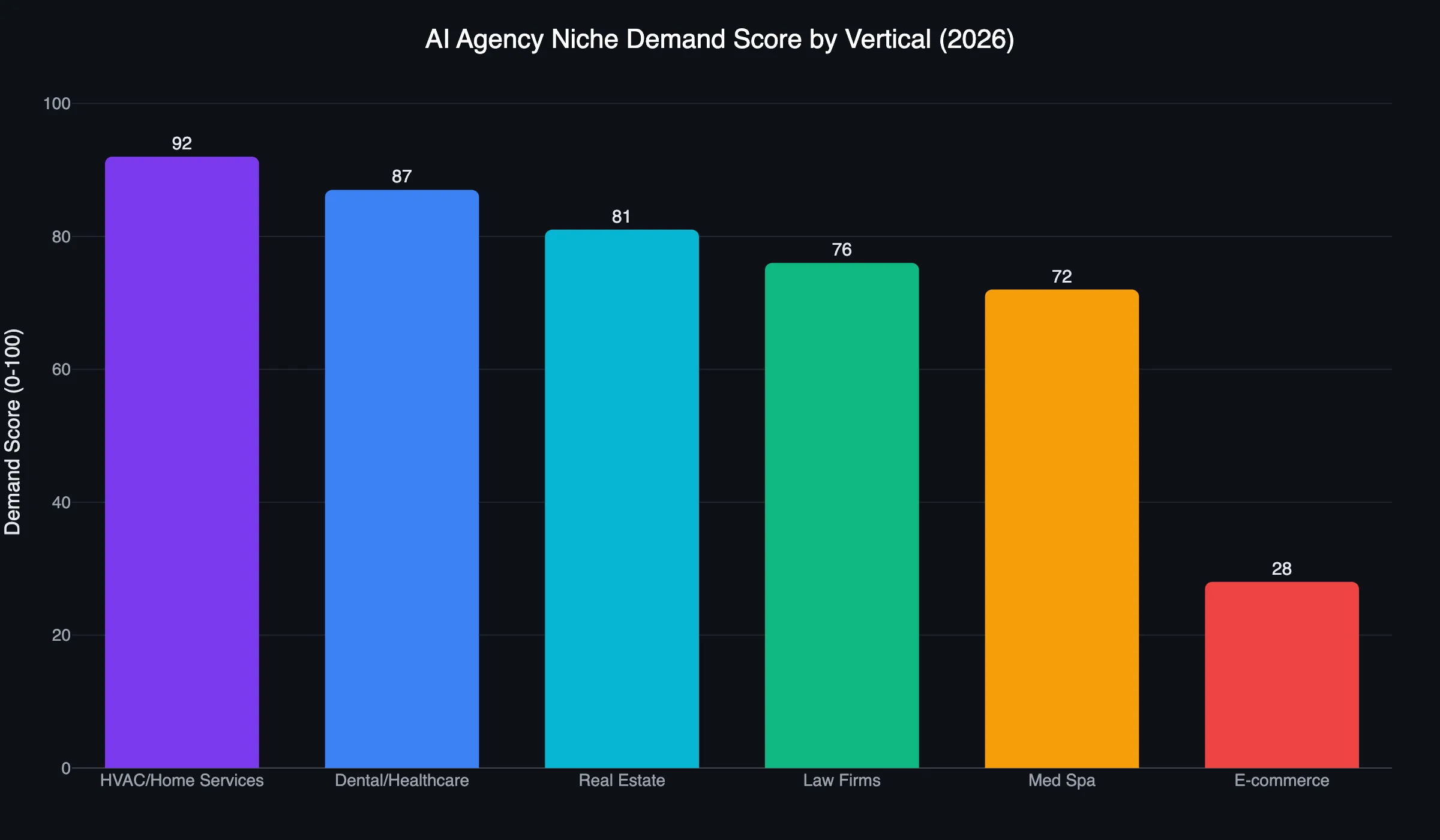
- The highest-demand niches are local service businesses with high call volume: HVAC, dental, real estate, law, and med spa.
- Platform choice is a first-year multiplier - a platform live in 5 minutes with no SIP trunking means more time acquiring clients, less time debugging.
The AI agency course market is doing better than most AI agencies. That’s not a judgment - it’s what the first-year income data shows for solo operators without an existing book of business.
That said, the underlying opportunity is real. The AI agents market hit $7.63 billion in 2025 and is projected to reach $50.31 billion by 2030 at a 44-45% CAGR, per DemandSage’s 2026 analysis. SMBs are buying. Demand is growing. The category is not going away.
The question is whether your AI agency will work. The honest answer depends on what you’re selling, who you’re selling to, and what platform you’re building on. Voice AI is where the unit economics make the most sense for a new operator. Businesses miss 62% of their phone calls, according to a study by 411 Locals across 85 businesses in 58 industries. That’s a recoverable problem with a clear price tag. Leadlock is the platform agencies use to fix it: true speech-to-speech AI that books directly into GoHighLevel and ServiceTitan, live in 5 minutes, from $0.12/minute all-in on Pro.
Here’s the honest answer to whether starting an AI agency is worth it in 2026.
What Is an AI Automation Agency?
An AI automation agency builds and manages AI-powered systems for business clients, replacing repetitive tasks like phone answering, lead qualification, appointment booking, and follow-up sequences with software that runs 24/7, covering everything from no-code workflows connecting apps like Zapier and n8n to full voice AI deployments where an agent handles every inbound call.
The most common entry point in 2026 is the AI receptionist: an agent that answers calls, qualifies callers, and books appointments directly into the client’s CRM or scheduling software. This is the highest-demand service for local SMBs because the ROI is immediate and calculable: when 62% of calls go unanswered, each captured call has a clear dollar value attached to it. An agent that recovers even a fraction of that missed volume pays for itself fast.
For the business on the other side of the table: hiring an AI agency makes sense when you need implementation help without managing the platform yourself, when your team has no bandwidth to configure and tune an agent, or when you want white-glove setup for a voice agent that’s live this week and optimized next month.
The agency model layers on top of the platform. You white-label the service, set your markup, and bill the client monthly. The platform handles the infrastructure. You handle the relationship.
Is the AI Automation Agency Model Legitimate or a Scam?
Specialized AI automation shops run 25-35% net margins, well above the 11-18% median for generalist digital agencies, according to Automaton Agency’s 2026 economics breakdown. The model is legitimate. The 90-day-six-figures pitch from the course market is the scam, not the underlying business of selling AI automation to local clients.
79% of employees say their companies are already using AI agents, per DemandSage’s 2026 data. The category is not speculative. Gartner’s 2025 forecast projects that agentic AI will autonomously resolve 80% of common customer service issues without human intervention by 2029, leading to a 30% reduction in operational costs. Businesses are buying because they have to.
The saturation concern is mostly a generalist problem. Reddit’s 2026 consensus, synthesized by Ciela AI, lands consistently in one place: “Saturated for lookalikes, not for focused operators.” Agencies pitching generic automations to any business in any industry are competing on price and losing. Agencies that own a vertical - HVAC, dental, real estate, law firms - report full pipelines and near-zero direct competition.
The gross margins on voice AI services run 50-70% on a well-run operation. Gross margin at 70% with net at 25-35% after the “take-home gap” (human review costs, tools, your own time) is the real picture. The course decks leave out the gap. The gap is where most new operators get surprised in month three.
The verdict: the model works. But only with specialization. A generalist AI agency in 2026 is a grind. A specialized one is a real business.
Is the AI Agency Market Already Too Saturated to Enter?
The AI agency market is not fully saturated in 2026, but the generalist segment is crowded enough that a new operator without a vertical specialty and an existing client network will struggle to differentiate on anything other than price, which is a losing position in a market where anyone can spin up a Zapier workflow or a basic chatbot.
The AI agent market is estimated at $11.2 billion in 2026 and growing at 44% year-over-year, per House of MVPs drawing on Grand View Research, IDC, and Gartner data. The SMB share is growing from 22% in 2023 toward a projected 35% by 2030 as no-code tooling matures. The market is expanding fast enough that a focused operator can claim a defensible position. The question is whether you will.
Where saturation actually bites:
- Generic “AI automation for small businesses” positioning with no vertical focus
- LinkedIn cold outreach about chatbots and workflow automation using the same course-taught script everyone else is using
- Competing on price instead of domain expertise
- Building on platforms that require developer knowledge, which limits your demo speed
Where the market still has real space:
- Voice AI for specific local verticals: home services, healthcare-adjacent, legal, financial
- White-label reseller partnerships with platforms like Leadlock that handle infrastructure
- GHL agencies adding voice as a bolt-on revenue line to existing sub-accounts
- Agencies that bring genuine industry knowledge alongside the technical deployment
Voice AI is particularly underserved at the local SMB level. Forty to sixty percent of business calls arrive outside standard hours, and most SMBs have no system for capturing them. That’s a solved problem today. Agencies that package it simply and sell it with a clear ROI story will keep finding buyers.
What Do You Actually Own After the Engagement?
After a typical AI automation agency engagement, the client owns the running workflows and you own the relationship if you structured it with a recurring retainer, but one-time build fees leave you with no recurring revenue, meaning what you actually own long-term is your domain reputation and your client list - and neither of those is worth anything without the retainer structure to back them up.
Platform choice determines how sticky your service is. A workflow automation like a Zapier sequence or an email drip can be copied by a determined client in an afternoon. A voice agent embedded in their GHL account, tuned to their business, and answering their calls 24/7 is harder to replicate internally. Churn is lower when the service is literally answering the phone.
Agencies building on Leadlock keep the relationship because the service is a managed deployment with GHL integration knowledge built in, not just a software login the client can take over directly.
For the margin math: if you charge a client $500/month to manage their AI receptionist and your platform cost on Leadlock Pro is $0.12/minute for Gemini Live or Grok Voice, 500 minutes per month in usage costs $60 plus a share of the $497 plan fee. The gross margin on that client is substantial. The work is in acquisition, not in delivery. That’s the right ratio for a services business.
How Do You Price AI Agency Services?
AI agency voice services in 2026 typically run $300-1,500 per month per client on a managed retainer, depending on call volume, integration complexity, and whether outbound campaigns are included, with a one-time setup fee of $500-2,500 that covers configuration and initial tuning and filters out clients who are not serious about the service.
Here is how the pricing stack works in practice:
| Service tier | What you deliver | Typical client charge | Platform cost (Leadlock Pro) |
|---|---|---|---|
| Starter | AI receptionist, inbound calls, 1 number | $300-500/mo | $497 plan + (mins x $0.12-$0.25) |
| Growth | Inbound + follow-up, GHL integration | $500-800/mo | $497 plan + usage |
| Full-service | Multi-agent, outbound campaigns, reporting | $1,000-1,500/mo | $497 plan + usage |
Leadlock’s Pro plan at $497/month covers unlimited sub-accounts. One plan fee spreads across your entire client book. Ten clients at $500/month brings in $5,000/month gross against $497 in fixed platform costs plus usage. n8n and AI integration specialists bill $40-100/hr on Upwork in 2026, with senior AI agent work reaching $125-250+/hr, per Layer3 Labs. Project rates work early. Monthly retainers are what build a business worth owning.
Four pricing rules that hold up in practice:
- Price on the value the client recovers (missed call revenue, staff hours freed), not on what a competitor charges.
- Always set a setup fee. It filters out clients who are not serious and covers your configuration time.
- Bill monthly at first. You will want flexibility to drop clients who are low-volume but high-maintenance.
- Build in a usage floor. If call volume drops below your minimum threshold, the retainer still covers your platform costs.
Which Niches Have the Highest Demand for New AI Agency Operators?
The highest-demand niches for AI agency operators in 2026 are local service businesses with high inbound call volume, predictable appointment-based revenue, and a documented missed-call problem, because those three factors mean the ROI is calculable and the client can feel the impact inside 30 days of going live.
Pro tip: The easiest close is showing a prospect how many calls their business missed last month. Call their number from a different phone after hours. If it rings to voicemail or goes unanswered, that’s your opening.
How the top niches break down:
- HVAC and home services: High call volume, seasonal peaks, emergency dispatching, 24/7 coverage need. Clients already spend money on answering services. Leadlock books directly into ServiceTitan and GoHighLevel, the two dominant platforms in home services, which makes the demo concrete and the close easier.
- Dental and healthcare: High appointment value, large no-show problem, front desk overwhelmed during peak hours. HIPAA-adjacent requirements raise the barrier slightly, which reduces competition from less serious agencies.
- Real estate: Roughly half of property inquiries arrive after business hours, per industry research. Leads that go unanswered after hours convert at a fraction of the rate of leads reached immediately. Agencies that demo a voice agent booking a showing at 10pm close real estate clients fast.
- Law firms: An Illinois family law firm running a voice agent went from missing 118 of 180 monthly calls to booking 123 consultations in three months, with 70% booked after hours, according to a Retell AI partner case study. That result sells itself for any agency pitching a local firm.
- Med spas: High ticket per visit, heavily appointment-driven, staff focused on treatment rather than phones. Selling AI voice agents to med spas with a GHL integration is a well-worn path with a clear demo script.
The niches to avoid early: e-commerce, SaaS, and enterprise accounts. Sales cycles are long, integrations are custom, and decision chains are bureaucratic. Win your first five clients in local services. Then decide whether you want to move upmarket.
What Are Realistic Year-One Outcomes for a New AI Agency?
For a solo operator starting without an existing client base or vertical niche, realistic year-one outcomes are 3-6 paying clients at $300-800/month retainers, an annualized gross income of $10,000-48,000, and a 12-18 month runway to reach full-time income levels, according to Layer3 Labs’ 2026 guide.
Five clients at $500/month is $2,500/month. That’s real money and not a full replacement for a salary until the book grows. Getting to $5,000-8,000/month requires 10-16 clients at average retainer prices - a realistic 12-18 month timeline for someone starting from scratch without an existing network.
The agencies that accelerate fastest have one of three things: an existing client book they can cross-sell, a vertical specialty they can own immediately, or a platform partnership that gives them a distribution edge. GHL agency owners who add voice as a bolt-on service to existing sub-accounts are the fastest path to meaningful recurring revenue. Leadlock’s GHL AI voice agent reseller playbook is built for exactly that motion.
Three things that determine year-one success more than anything else:
- Niche specificity. Generalists take longer to close and charge less. Specialists command premiums and get referrals from day one.
- Demo quality. Showing a live agent answering calls for a dental practice closes dental clients. A generic demo closes no one.
- Platform choice. Building on a platform that’s live in 5 minutes with no SIP trunking required, like Leadlock with model options including Gemini Live, Grok Voice, and OpenAI Realtime, means you spend time acquiring clients rather than debugging infrastructure.
The gross margins on voice AI services run 50-70% on a well-run operation, per Automaton Agency’s 2026 economics analysis. The math works. But gross margin means nothing until you have clients. Acquisition is the hard part in year one.
Frequently Asked Questions
Q: Is it too late to start an AI automation agency in 2026?
It is not too late for a focused operator. The generalist segment is crowded, but local verticals like HVAC, dental, law, and med spa still have room for agencies with real domain knowledge and a working demo. The AI agent market is growing at 44% year-over-year in 2026, per House of MVPs, so the category is expanding faster than most operators are entering it. Specialize or wait for a less crowded moment that is not coming.
Q: How much money can you make running an AI automation agency?
Year-one solo operators typically land 3-6 paying clients at $300-800/month, per Layer3 Labs. That’s $10,000-48,000 annualized before expenses. A 10-client book at $500/month is $60,000/year gross. Specialized shops with strong vertical positioning can reach $100,000+ in annual revenue by year two or three, with 25-35% net margins at scale, per Automaton Agency.
Q: What skills do you need to start an AI automation agency?
You need enough technical familiarity to configure and demo a voice agent (platforms like Leadlock require no coding), plus sales skills to close local business clients. Domain knowledge in your target vertical is worth more than technical depth. An ex-dental office manager who understands patient scheduling friction will outsell a developer who has never run a front desk.
Q: How do AI automation agencies typically price their services?
Most agencies charge a setup fee of $500-2,500 plus a monthly retainer of $300-1,500. The retainer covers platform costs, monitoring, and ongoing optimization. Voice AI retainers include a per-minute usage component passed through at a markup. Agencies running on Leadlock Pro have one plan fee at $497/month covering unlimited client sub-accounts, so margin scales with the number of clients.
Q: What are the biggest risks of starting an AI agency?
Three main risks: choosing a platform too complex to demo quickly (kills your close rate); underpricing early clients and setting bad market expectations; and building on a platform you don’t control, where a pricing change wipes out your margins. Platform risk is underrated. Model your client costs at 2x the current per-minute rate before committing to a price.
Q: How long does it take to land the first paying client?
Most operators land their first client within 30-60 days with a specific niche and a working demo. Without a niche, that timeline extends to 3-6 months because sales cycles lengthen and close rates drop. The fastest path is calling 10 local businesses in one vertical after hours to confirm the call goes unanswered, then showing them the fix on a live demo the next day.
Ready to build an AI agency on a platform that’s live in 5 minutes? Leadlock gives GHL agency owners speech-to-speech voice AI that books into GoHighLevel out of the box (ServiceTitan can be connected) - from $0.12/minute all-in on Pro. Book a 15-minute call with Dan.
See It Book a Real Job
Voice agents that book into ServiceTitan and GoHighLevel, live today for home-service brands. Book 15 minutes with Dan, or start a 7-day trial from the pricing page.
Book a 15-minute call with Dan